What kind of lake fits your weekend — throttling up for tubing or drifting through a quiet sunrise with a paddleboard? If you are eyeing Kalkaska County, you’ll hear “all-sports” and “no-wake” a lot, and those labels shape how you live, play, and maintain a waterfront home. You want a place that matches your lifestyle and avoids surprises with noise, boat traffic, and rules. In this guide, you’ll learn the real differences, how they affect property decisions, and a step-by-step way to confirm lake rules for any Kalkaska County lake, with practical examples for Manistee Lake and Bear Lake. Let’s dive in.
All-sports vs no-wake defined
All-sports lakes generally allow high-speed motor boating, water-skiing, wakeboarding, tubing, and personal watercraft during normal boating hours. You will see runabouts, deck boats, fast pontoons, and jet skis on busy summer days.
No-wake lakes require boats to operate at idle or no-wake speed across most or all of the lake. High-speed passes and wakes for towing are not allowed, and personal watercraft may be limited or banned depending on local rules.
These labels are common shorthand, but the legal status of a lake depends on local ordinances, lake association rules, or deed restrictions. Do not rely on online labels alone. Verify rules before you buy.
Everyday differences
Boating and recreation
On all-sports lakes, you can water-ski, wakeboard, tube, and cruise at speed. Larger fishing boats and social outings are common, especially on weekends and holidays.
On no-wake lakes, the pace is slower. Anglers, kayakers, canoeists, paddleboarders, and swimmers often prefer the calmer water and quieter shoreline. Low-horsepower motors and electric trolling motors are typical.
Noise, wakes, safety
All-sports lakes bring more engine noise and larger boat wakes, which can affect docks and shoreline stability. You should expect busier traffic during peak summer.
No-wake lakes are quieter with fewer large wakes. They can still be popular, but the traffic tends to be slower and easier to predict. Many families appreciate the calmer water for swimming.
Seasonal patterns
Northern Michigan has a short powered-boating season, so all-sports activity clusters from late spring through early fall. Weekends and holidays see the most traffic.
Outside of peak months, many lakes are peaceful. Winter brings ice fishing on many small lakes when conditions allow. Speed and wake rules apply during open-water seasons.
Property implications
Docks and permits
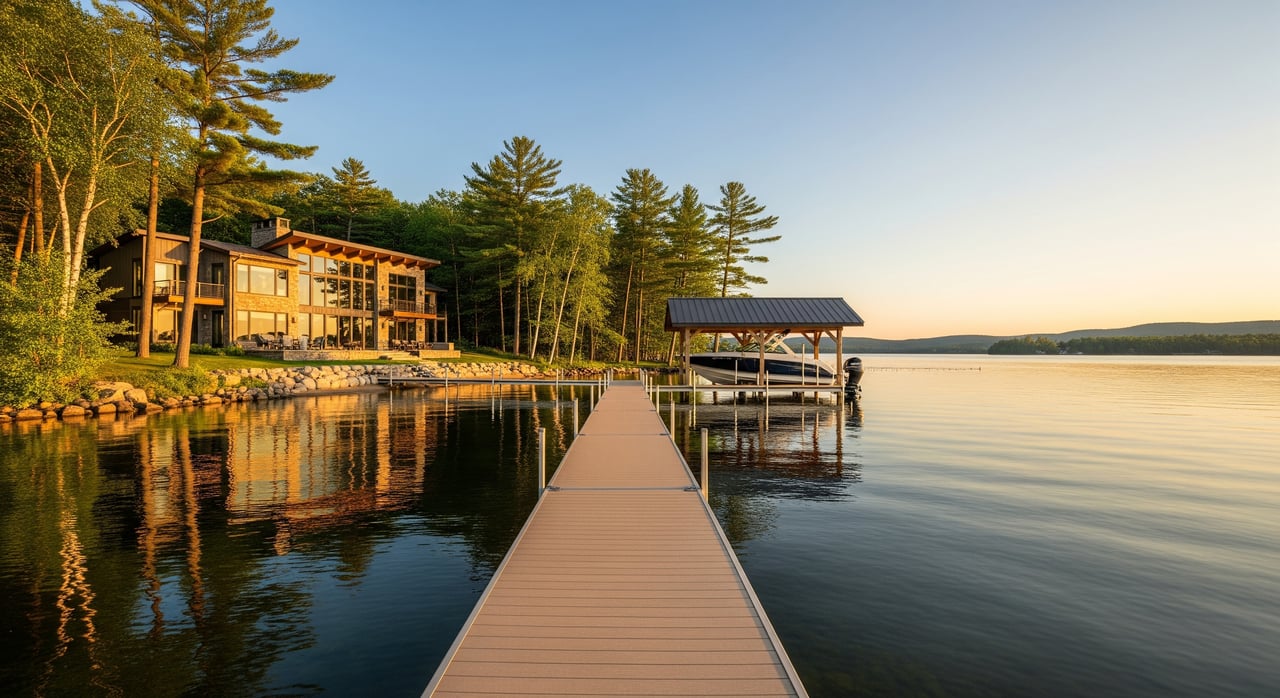
On all-sports lakes, plan for sturdier docks and possibly more frequent shoreline maintenance due to wakes. If you want to install or modify a dock, seawall, or boathouse, you should consult the Michigan Department of Environment, Great Lakes, and Energy and local permitting offices first.
On no-wake lakes, docks can often be lighter, and there is typically less wake-driven erosion. Always confirm what is allowed before planning new structures.
Insurance and liability
Busier lakes with towing and personal watercraft can increase liability exposure and potentially affect premiums. Ask your insurance provider for quotes tied to the specific lake and your intended water activities.
On quieter lakes, you may face fewer high-speed risks, but coverage still needs to fit your use, dock structures, and any guest boating.
Resale and lifestyle fit
All-sports lakes often attract active boaters who want high-energy recreation. No-wake lakes appeal to buyers who value peace, wildlife, and gentle water. Price differences vary by lake, view, lot size, and public access.
Use your lifestyle as the filter. If towing sports are central to your summer plans, an all-sports lake can be worth it. If you dream of coffee on a still shoreline with birdsong and easy paddling, the no-wake experience may be the better match.
Verify lake status
Who sets the rules
Lake rules come from several layers. Township or county ordinances may set speed or no-wake limits. Lake associations might have bylaws or recorded covenants that limit personal watercraft, horsepower, or dock sizes. State boating laws always apply.
You should also review deed restrictions to understand riparian rights, easements, and any recorded use limits. Shoreline work typically requires permits.
Step-by-step checklist
- Look up the lake and your parcel in the Kalkaska County GIS to confirm the township and boundaries.
- Contact the township clerk to ask if there is a speed or no-wake ordinance for that lake. Request a copy.
- Locate and contact the lake association. Ask for bylaws, posted rules, and guest policies for boats and docks.
- Review the deed and any subdivision covenants through the Register of Deeds to confirm riparian rights and any use limits.
- Confirm public access points through county or state listings to gauge non-resident boating pressure.
- Review statewide boating laws and personal watercraft rules that apply regardless of local status.
- For docks and shoreline work, consult state and county permitting offices before you plan improvements.
Public access factors
Lakes with public access can see more transient boat traffic during peak season. This can influence noise, wake activity, and weekend crowding. Private or association-managed lakes often have different expectations and may enforce covenants related to boat types, guest slips, and dock placement.
Manistee Lake steps
Use this process for Manistee Lake to confirm what is allowed before you purchase:
- Identify the township and confirm parcel details using the county GIS.
- Ask the township clerk for any posted speed or no-wake ordinances and whether seasonal rules apply.
- Check if there is a lake association or community group and request current rules on personal watercraft, towing, and guest access.
- Verify public access points and learn how busy the lake gets on weekends and holidays.
- Review past permits for docks and shoreline work on similar parcels to understand what is typically approved.
Bear Lake steps
Follow a similar path for Bear Lake to understand everyday use and restrictions:
- Locate the lake and parcels in the county GIS and note whether lots are private, association-managed, or served by public access.
- Contact the Bear Lake association or leadership for bylaws, speed rules, personal watercraft policies, and guest guidelines.
- Confirm whether the local township sets a full-lake no-wake, partial no-wake zones, or allows all-sports operation.
- Ask about seasonal traffic patterns and common boat types on the lake to set realistic expectations.
Other local waters
For any Kalkaska County lake you are considering, repeat the GIS to township to association to deed sequence. If the water connects to a chain or has multiple basins, confirm whether rules differ by area or season. Some lakes have partial no-wake zones or specific horsepower limits.
Due diligence checklist
- Confirm the lake’s designation with the township and the lake association.
- Review your deed for riparian rights, recorded easements, and any covenants that limit boats, docks, or guests.
- Request maps that show no-wake zones and restricted areas.
- Check permit history for docks, seawalls, and shoreline improvements on the property.
- Get insurance quotes based on your planned boat types and towing activities.
- Order a shoreline condition review and a survey to confirm lot lines to the water’s edge as needed.
- If you plan towing sports or personal watercraft, verify local rules and seasonal limits before closing.
Common scenarios
- You want tubing and wakeboarding: Focus on all-sports lakes, then confirm that personal watercraft and towing are allowed locally.
- You want calm water for kids and paddling: Target no-wake lakes and confirm any low-horsepower or electric-only rules.
- You plan a large or permanent dock: Check shoreline permits and association rules before designing the structure.
- You prefer quiet weekends: Weigh public access and traffic patterns, even on no-wake lakes, to set expectations.
Work with a local guide
Your perfect lake comes down to how you live, not just the view. By verifying rules up front and matching the lake type to your lifestyle, you protect your investment and enjoy the water the way you intended. If you want a local partner to confirm ordinances, connect with associations, and weigh docks, insurance, and resale, reach out to Christina Roberts. We’ll help you choose with confidence and make the lake life you imagine feel easy.
FAQs
What is the difference between all-sports and no-wake lakes?
- All-sports lakes allow high-speed boating and towing activities, while no-wake lakes require idle-speed operation and limit wakes across most or all of the lake.
Who decides a Kalkaska County lake’s speed or no-wake rules?
- Township or county ordinances set enforceable rules, lake associations may impose bylaws or covenants, and statewide boating laws always apply.
Are personal watercraft automatically allowed on all-sports lakes?
- Not always. Local ordinances or association rules may limit or ban personal watercraft even on lakes viewed as all-sports.
Does no-wake mean motorboats are banned?
- No. Most no-wake lakes still allow motorboats, but only at idle or no-wake speed. Always confirm the exact definition locally.
How do lake rules affect dock plans and shoreline work?
- Shoreline structures often require permits, and associations may set size or placement limits. Check permits and rules before you build.
Will insurance be higher on busier lakes?
- It can be. High-speed activities and personal watercraft may increase liability exposure. Get quotes based on the specific lake and planned use.
How do I quickly confirm a lake’s status before I write an offer?
- Use the county GIS to identify the parcel, call the township clerk for ordinances, contact the lake association for rules, review the deed, and check permit history for docks and shoreline work.