Are you picturing sunsets over West Grand Traverse Bay or imagining quiet starry nights on a wooded acre? Both options are real and rewarding in Grand Traverse County, but they deliver very different daily lives. If you are deciding between bayfront and inland living, you want a clear look at lifestyle, costs, rules, and risks. This guide breaks down what changes from one side of the map to the other and gives you a simple checklist to shop with confidence. Let’s dive in.
How the map shapes life
Bayfront and near Traverse City
Bayfront areas cluster around West Grand Traverse Bay and within quick reach of Traverse City. You will find public beaches, marinas, and waterfront parks close by. Living here means fast access to restaurants, shops, cultural events, and regional healthcare.
Old Mission Peninsula
Old Mission Peninsula stretches north from the city with a blend of bayfront homes, vineyards, orchards, and scenic drives. It mixes a waterfront lifestyle with a rural, agricultural feel. Narrow, winding roads and vineyard views are part of daily life.
Inland and rural townships
Inland areas range from suburban neighborhoods on larger lots to farms and forested acreage. You may be near smaller inland lakes, rivers, and trail systems. Privacy and space are the big draws, along with a quieter pace.
Day-to-day lifestyle
Water and outdoor recreation
- Bayfront: Immediate access to boating, paddleboarding, swimming, and fishing. Quick trips to marinas, public launches, and lakeshore parks are part of summer routines.
- Inland: Recreation leans toward inland lakes and rivers where available, plus hiking, snowmobiling, OHV trails, hunting, and cross-country skiing. Many properties have room for gardens, hobbies, and outbuildings.
Seasonal rhythms and crowds
- Bayfront: Summer brings more visitors, second-home activity, and festivals. Expect busier streets and livelier waterfront parks.
- Inland: You feel less seasonal pressure. It stays quieter in summer and steady year-round, aside from farm and orchard traffic during harvest seasons.
Services and commutes
- Bayfront and near-city: You are closer to grocery options, dining, and cultural venues. Munson Medical Center, the region’s major hospital, is minutes from many in-town neighborhoods. Bay Area Transportation Authority routes tend to be more accessible in and around Traverse City.
- Inland: You will likely drive farther for full-service grocery, entertainment, and medical appointments. Many buyers accept the tradeoff for privacy and acreage.
Nightlife and community
- Bayfront/Traverse City: A wider range of restaurants, bars, galleries, farmers markets, and festivals. It fits if you enjoy an active social scene.
- Inland: Community life often centers around local schools, town halls, and seasonal fairs. The pace is calmer and more neighborhood-focused.
Weather and microclimate
Proximity to the bay can soften temperature swings, offering slightly cooler summers and somewhat milder winters compared with inland spots. However, exposed shorelines also feel stronger winds, and lake-effect snow can boost totals near the water. Inland areas see fewer wind-driven impacts but still get substantial winter snow.
Housing and prices
Typical bayfront homes
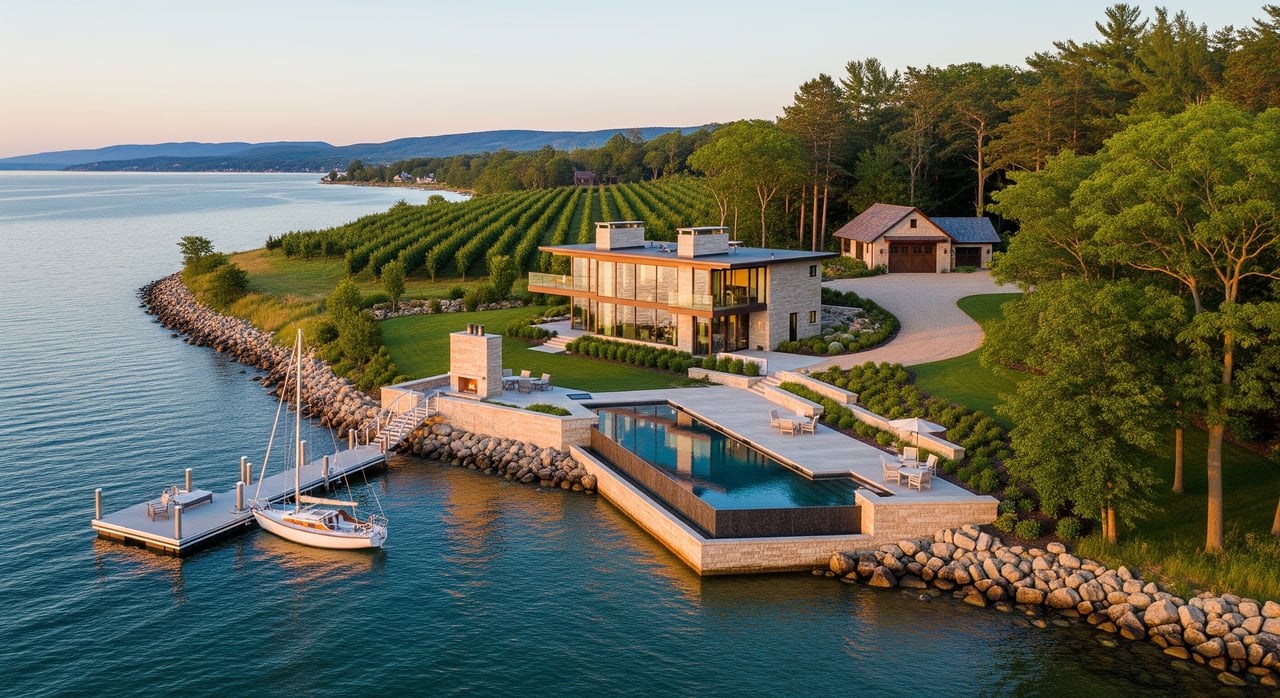
Look for updated cottages, contemporary lake houses, and townhomes or condos near downtown. Many feature expansive windows, decks, and docks that celebrate the view. On the peninsula, you will also see newer construction tucked among vineyards and orchards.
Typical inland homes
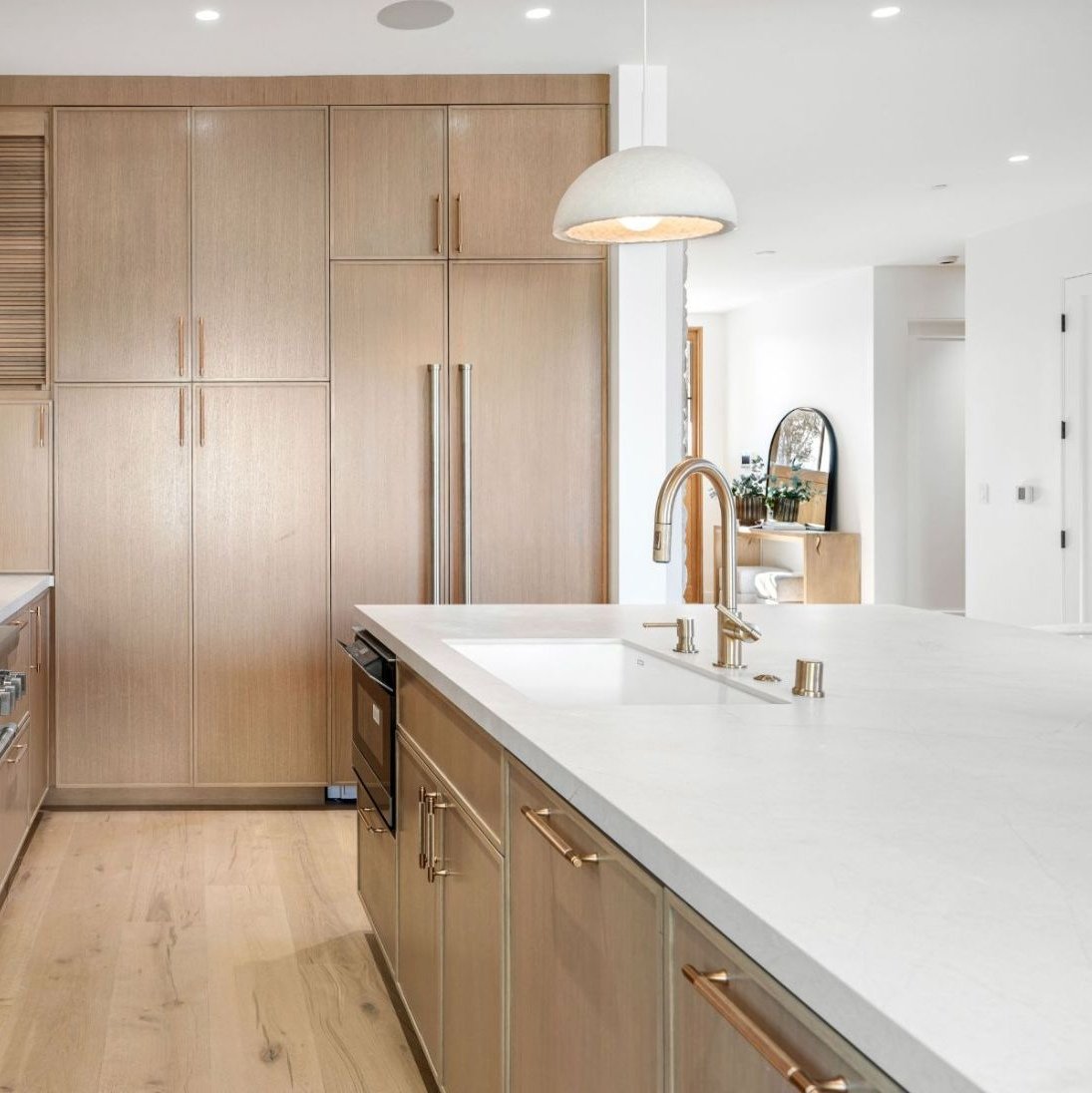
Expect farmhouses, ranch homes, log or timber-frame builds, newer subdivisions with larger lots, and homes on acreage with barns or outbuildings. Private wells and septic systems are more common. You may find more space for workshops, animals, or storage.
What drives price and resale
Across many markets, waterfront properties command a premium per square foot. In Grand Traverse County, that premium depends on lot size, view corridors, shoreline quality, dock potential, and proximity to Traverse City amenities. Inland homes generally offer lower cost per acre and per finished square foot and can be attractive for value, yard space, and lower-density living. Inventory and demand have tightened across the region since 2020, so local comps are essential when you get serious.
Ongoing ownership costs
- Bayfront: Plan for shoreline maintenance, potential erosion control, dock repairs, and greater exposure to wind, ice, and storms. Insurance can be higher, and if your home sits in a mapped flood zone, you may need flood coverage.
- Inland: Budget for septic pumping and potential repairs, well testing and upkeep, driveway snow removal, and gravel road maintenance if applicable.
Property taxes and the PRE
Michigan taxes combine local millage with assessed value. Waterfront assessments are often higher, leading to higher annual taxes. If it is your primary residence, you may qualify for the Principal Residence Exemption, which reduces certain school operating taxes. Always confirm details with the county treasurer or local assessor.
Rules, utilities, and risks
Shoreline permits and EGLE
Waterfront development can trigger extra layers of review. Docks, piers, boathouses, seawalls, riprap, and grading near the water often require permits. The Michigan Department of Environment, Great Lakes, and Energy oversees activities that affect Great Lakes waters and submerged lands. Townships may add shoreline setbacks and tree removal rules, so plan ahead.
Septic, wells, and municipal service
Many inland homes rely on private wells and septic systems. A full inspection and permit check are essential. Closer to the bay and within or near Traverse City, some neighborhoods have municipal water and sewer. Service availability varies by township and street, so verify for each property.
Flooding, erosion, and insurance
Low-lying bayfront parcels can fall within FEMA flood zones. If you have a mortgage from a regulated lender, flood insurance may be required. Even outside mapped zones, storms and high-water cycles can affect shorelines. Flood coverage, wind coverage, and higher homeowner premiums are common on waterfronts, while inland properties face different risks such as tree damage, septic failures, or limited road access during storms.
Broadband and utilities
Electric and heating options are similar throughout the county, though rural properties might use propane or have longer service runs. Broadband can vary widely in rural pockets. If you work from home, confirm high-speed availability and cellular coverage at the specific address before you buy.
Roads and winter services
Inland and peninsula roads can be narrow with varying plow schedules compared with in-town streets. Long private driveways add time and cost for snow removal. If you choose a more remote property, consider a plan for winter access and deliveries.
Quick decision guide
- Choose bayfront if you value immediate water access, sweeping views, and fast trips to Traverse City events, dining, and healthcare. Expect higher purchase prices, more permitting, and specialized maintenance.
- Choose inland if you want acreage, privacy, and value, with room for hobbies and outbuildings. Expect longer drives for services and more responsibility for wells, septic, and snow removal.
- Consider Old Mission Peninsula if you want a blend of waterfront access, vineyard and orchard charm, and a scenic country feel with a slower pace.
Buyer due diligence checklist
Lifestyle fit
- Rank daily water access versus privacy and space. Decide if launching a boat from your own property is a must-have or a nice-to-have.
- Map drive times to work, Cherry Capital Airport, and your favorite grocery and coffee spots.
Utilities and systems
- Confirm municipal water and sewer or plan for well and septic inspections, permits, and capacity.
- Test broadband and cell service at the address to match work-from-home needs.
Insurance and hazards
- Check FEMA flood maps and ask for elevation certificates on low-lying bayfront parcels.
- Get insurance quotes early, including flood if needed, and price out wind or ice exposure.
Permits and property rights
- Verify riparian rights, dock allowances, and any easements. Contact township planning and EGLE if you plan shoreline work.
- If building or expanding, confirm setbacks, septic sizing, well placement, and shoreline protection rules with local officials.
Seasonal use and rental rules
- If you plan a second home or short-term rental, research township ordinances and licensing. Regulations vary by township and may change over time.
Long-term costs and upkeep
- Bayfront: budget for shoreline stabilization, dock replacement cycles, and higher storm wear.
- Inland: plan for routine septic pumping, driveway grading or plowing, and well maintenance.
Community and schools
- Verify school district boundaries for the exact address. Consider proximity to community centers, parks, and transit routes that matter to your routine.
The bottom line
Both bayfront and inland living in Grand Traverse County offer a rich Northern Michigan lifestyle. Bayfront puts you steps from the water and close to Traverse City’s restaurants, festivals, and medical services, with higher purchase prices and more rules to navigate. Inland gives you space, privacy, and value, with longer drives and more self-reliance for utilities and winter access. The right choice is the one that fits your daily priorities and long-term plans.
If you want neighborhood-level insight, recent comps, and help coordinating permits, inspections, and insurance quotes, connect with a local, high-touch team that knows the shoreline and the back roads. Reach out to Christina Roberts to compare properties and build a smart plan.
FAQs
How much more do bayfront homes cost in Grand Traverse County?
- Waterfront properties typically sell at a premium, but the difference varies by lot size, view, shoreline quality, and proximity to Traverse City; current MLS comps are the best guide.
Do I need flood insurance for a bayfront home near Traverse City?
- If the property lies in a FEMA-mapped flood zone and you finance with a regulated lender, flood insurance is usually required; consider coverage even outside mapped zones.
Are there restrictions on docks or shoreline work in Grand Traverse County?
- Yes, docks and shoreline alterations often require permits and reviews by EGLE and local townships, and specific setbacks or protections may apply by location.
What should I know about wells and septic for inland homes in Northern Michigan?
- Many inland properties use private wells and septic systems; schedule full inspections, confirm permits, and plan routine maintenance and potential upgrades.
How does summer seasonality affect living near the bay in Traverse City?
- Expect more visitors, events, and traffic during summer near the bay, with a quieter pace in winter; inland areas experience less seasonal crowding year-round.